
Introduction
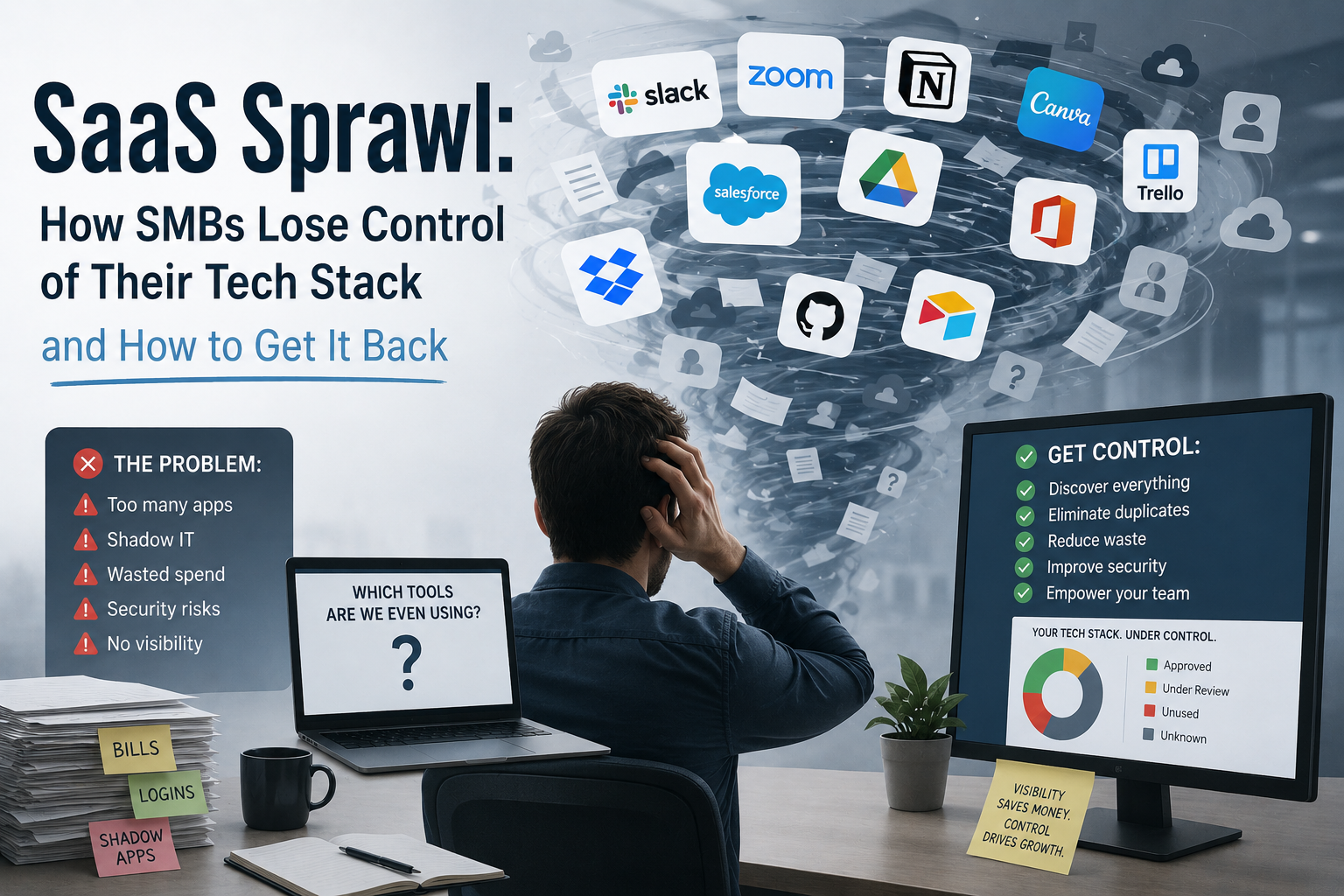
SaaS adoption has removed the friction from buying software. Any team member with a company card can spin up a new tool in minutes. This is genuinely useful for moving fast – and genuinely dangerous for IT governance, security, and cost management.
This guide covers how SaaS sprawl develops in growing SMBs, what it costs, and a practical approach to getting visibility and control back.
How SaaS Sprawl Happens
It rarely happens through bad decisions. It happens through good decisions made without coordination. A sales team needs a CRM. Marketing needs an automation platform. Engineering needs monitoring tools. Customer success needs a ticketing system. Each decision is individually sensible. The aggregate is chaos.
The pattern accelerates when the person who bought a tool leaves the company. The tool keeps running. The billing keeps going. Nobody knows what it does or whether it is still needed.
The Real Cost
Direct cost: wasted spend
In an environment I audited, a 47-person company had 43 active SaaS subscriptions. Of those, 12 had zero active users in the past 90 days. Monthly spend on unused tools: approximately £700. Annualised: £8,400. That is a meaningful number for a company at that size.
Indirect cost: security exposure
Every SaaS tool with active user accounts is an entry point. Unmanaged tools mean unmanaged access. When someone leaves, their account in the forgotten project management tool stays active – because nobody knew it existed.
Operational cost: duplicated effort
Duplicate tools – two project management platforms, two document editors, two communication tools – mean data is split across systems and teams cannot collaborate effectively. I have seen companies running both Notion and Confluence simultaneously, with different teams using each and neither containing a complete picture.
Getting Visibility: The SaaS Audit
The starting point is a complete inventory. Pull billing records from company cards and bank statements. Check your identity provider (Entra ID, Okta, Google Workspace) for OAuth-connected applications. Ask each team lead what tools their team uses.
For each tool, record: monthly cost, number of active users, owner, and whether it duplicates another tool. This exercise alone typically surfaces significant savings opportunities.
Establishing Governance
Once you have visibility, the goal is to prevent the same sprawl from recurring. Practical governance for an SMB does not require a complex approval process. It requires three things: a single place where all tools are listed, a named owner for each tool, and a process for reviewing access when someone leaves.
Connecting SaaS tools to your identity provider via SSO achieves two things simultaneously: it gives you visibility into who is using what, and it means that disabling a user in Entra ID or Okta revokes access across connected tools automatically.
Conclusion
SaaS management is one of the fastest-return IT investments for a growing SMB. The combination of cost savings, security improvement, and operational clarity typically justifies the effort within the first month. The challenge is finding someone who will actually do the unglamorous work of cataloguing, auditing, and governing the stack – rather than just recommending enterprise tools that create more complexity.
https://ITops.zlefterov.com
https://zlefterov.com