
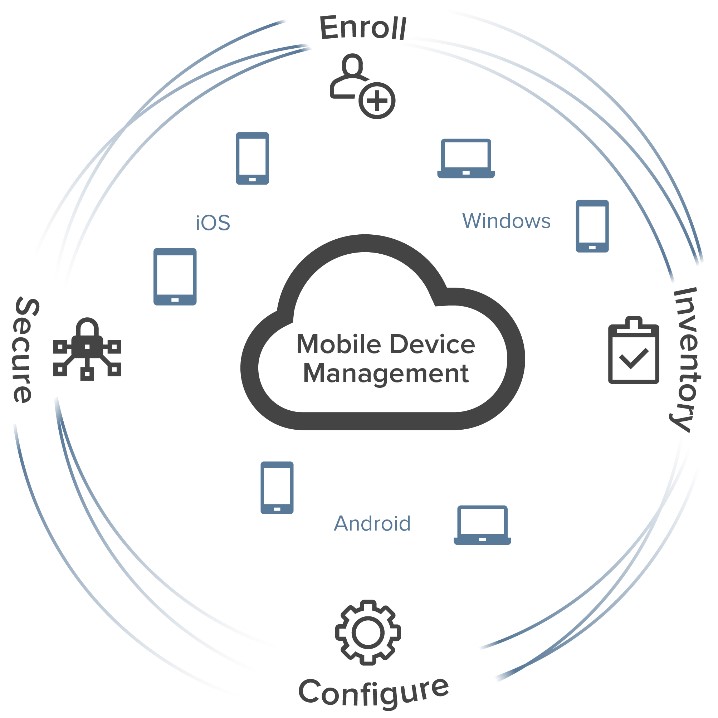
EDM/MDM: Endpoint Device Management systems and Mobile Device Management systems
Hello Everyone! In this post I will share with you some information about the benefits of EDM/MDM systems that you can integrate to your company assets. Yes, I consider an EDM/MDM system as valuable IT asset as it provides so many benefits that other systems can’t really provide. Manual work is not a system. It’s a list of tasks that are not easy to accomplish due to lack of remote control or constant maintenance possibilities. I have experience with EDM/MDM systems mainly in big international companies, from startup to inter continental company and long time on the market companies. EDM/MDM is a solution for every modern company which wants to grow, evolve and have good client relationship. This post will be a bit longer but it will give us a better view what is EDM/MDM and how beneficial it is for small, medium or large companies.
Chapter 1 – Pros
Endpoint Device Management (EDM) is the practice of managing all the endpoint devices in a network, including laptops, desktops, smartphones, tablets, and other Internet of Things (IoT) devices. EDM systems provide companies with the ability to manage these devices centrally, ensuring that they are secure, up-to-date, and functioning optimally. In this article, we’ll explore why EDM is beneficial for companies. -Enhanced Security One of the primary benefits of an EDM system is enhanced security. With so many endpoint devices connected to a network, it’s easy for security vulnerabilities to arise. An EDM system can help prevent security breaches by ensuring that all devices are up-to-date with the latest security patches and that antivirus software is installed and functioning correctly. The system can also monitor endpoints for potential security threats, providing IT teams with real-time alerts that enable them to take prompt action. -Simplified Device Management Managing multiple endpoint devices can be a complex and time-consuming task. However, an EDM system simplifies device management by enabling IT teams to manage all devices from a central location. This means that IT teams can remotely configure, monitor, and troubleshoot devices, saving time and reducing the need for on-site visits. -Increased Productivity With an EDM system in place, employees can work more efficiently, with access to the latest software and applications they need to perform their jobs. The system can also automate software updates, reducing the need for employees to manually update their devices, which can be time-consuming and disruptive to productivity. -Cost Savings An EDM system can provide cost savings to a company in several ways. First, the system can reduce the need for on-site IT support, as many device issues can be resolved remotely. Additionally, the system can help prevent security breaches, which can be costly to remediate. Finally, the system can extend the life of endpoint devices by ensuring that they are well-maintained and functioning optimally. -Improved Compliance Many companies are subject to regulations and standards that require them to maintain certain levels of security and data privacy. An EDM system can help companies achieve and maintain compliance with these regulations by providing a centralised system for managing device security and data privacy.
Chapter 2 – Cons or not so
While there are many benefits to integrating an Endpoint Device Management (EDM) system, there are also some potential negative aspects to consider. Here are a few: Reduced Device Control for Users One potential negative aspect of an EDM system is that it can reduce the level of device control that users have. With an EDM system in place, IT teams may restrict access to certain applications or functions to ensure device security. While this can be beneficial for the company, it may limit the user’s ability to use their device as they see fit, potentially leading to frustration and reduced productivity. -Technical Challenges Implementing an EDM system can be technically challenging, especially for companies with a large number of endpoint devices. The IT team will need to ensure that all devices are compatible with the system and configure the system correctly, which can be time-consuming and may require specialised technical knowledge. -Increased Costs An EDM system can be costly to implement and maintain. Companies may need to invest in additional hardware or software, and ongoing maintenance and support costs can add up over time. Additionally, if the system is not implemented correctly, it may require additional IT support, which can also increase costs. -Privacy Concerns Another potential negative aspect of an EDM system is privacy concerns. An EDM system may collect data about endpoint devices and their users, which could raise privacy concerns. Companies must ensure that they are transparent about the data they collect and how it is used, and that they comply with data privacy regulations. -Resistance to Change Finally, some employees may resist the implementation of an EDM system, particularly if it changes the way they use their devices. It’s important for companies to communicate the benefits of the system clearly and provide appropriate training and support to ensure that employees are comfortable using it. While an Endpoint Device Management system can provide many benefits, companies should also be aware of the potential negative aspects, such as reduced device control for users, technical challenges, increased costs, privacy concerns, and resistance to change. By considering these factors, companies can make an informed decision about whether an EDM system is the right choice for their organisation.
Chapter 3 – EDM Risks
Technical challenges: Implementing an EDM system can be technically challenging, especially for companies with a large number of endpoint devices. The IT team will need to ensure that all devices are compatible with the system and configure the system correctly, which can be time-consuming and may require specialised technical knowledge. -Employee resistance: Some employees may resist the implementation of an EDM system, particularly if it changes the way they use their devices. It’s important for companies to communicate the benefits of the system clearly and provide appropriate training and support to ensure that employees are comfortable using it. -Increased costs: Implementing and maintaining an EDM system can be expensive. Companies may need to invest in additional hardware or software, and ongoing maintenance and support costs can add up over time. Additionally, if the system is not implemented correctly, it may require additional IT support, which can also increase costs. -Reduced device control for users: An EDM system can reduce the level of device control that users have. With an EDM system in place, IT teams may restrict access to certain applications or functions to ensure device security. While this can be beneficial for the company, it may limit the user’s ability to use their device as they see fit, potentially leading to frustration and reduced productivity. -Security and privacy concerns: An EDM system may collect data about endpoint devices and their users, which could raise security and privacy concerns. Companies must ensure that they are transparent about the data they collect and how it is used, and that they comply with data privacy regulations.
Chapter 4 – The right person to manage/maintenance EDM
implementing and managing an Endpoint Device Management (EDM) system typically requires skilled IT professionals who have experience with the specific EDM solution being used. In addition to having the right skills and knowledge, it’s important for IT professionals managing an EDM system to stay up-to-date with new technologies and emerging threats to ensure that the system is secure and effective. They may also need to work closely with other teams within the company, such as HR and legal, to ensure that the EDM system is compliant with relevant regulations and policies. These IT professionals should have knowledge and skills in areas such as: -System administration: IT professionals should have experience with managing and maintaining servers, network infrastructure, and other components of the EDM system. -Mobile device management (MDM): IT professionals should have experience with mobile device management tools and technologies, as well as an understanding of best practices for managing mobile devices. -Security: IT professionals should have a strong understanding of security best practices, including data encryption, password policies, and access control, to ensure that the EDM system is secure and data is protected. -Troubleshooting: IT professionals should have experience with diagnosing and resolving technical issues that may arise when managing endpoint devices. -Communication: IT professionals should be able to communicate effectively with end-users to provide technical support and training. In addition to having the right skills and knowledge, it’s important for IT professionals managing an EDM system to stay up-to-date with new technologies and emerging threats to ensure that the system is secure and effective. They may also need to work closely with other teams within the company, such as HR and legal, to ensure that the EDM system is compliant with relevant regulations and policies.
Chapter 5 – Consequences of avoiding EDM implementation
There are lots of scenarios that could lead to emergencies and even close businesses. Considering EDM is beneficial than every other single system that could be implemented. -Security risks: Without an EDM system in place, endpoint devices are more vulnerable to security threats such as malware, viruses, and data breaches. This can lead to sensitive data being compromised, which can damage the company’s reputation and lead to legal and financial consequences. -Lack of control: Without an EDM system, companies may have limited control over the devices their employees use for work purposes. This can lead to inconsistent policies and procedures, which can result in productivity issues and reduced efficiency. -Difficulty managing updates: Without an EDM system, managing software and security updates across a large number of devices can be time-consuming and complex. This can result in devices being left unpatched, which can create security vulnerabilities. -Inefficient support: Without an EDM system, providing technical support for endpoint devices can be difficult and time-consuming. This can lead to frustrated employees and reduced productivity. -Compliance risks: Without an EDM system in place, companies may have difficulty ensuring that devices are compliant with industry regulations and standards. This can lead to legal and financial consequences.
Chapter 6 – Stability
Here are some ways in which EDM can provide stability: -Improved security: An EDM system can help protect endpoint devices from security threats such as malware, viruses, and data breaches. By ensuring that devices are properly configured and regularly updated with the latest security patches, EDM can help reduce the risk of security incidents that can disrupt business operations and damage the company’s reputation. -Consistent policies and procedures: With an EDM system in place, companies can enforce consistent policies and procedures across all endpoint devices. This can help ensure that employees are using devices in a secure and compliant manner, reducing the risk of errors and inconsistencies that can lead to downtime and other issues. -Efficient support: An EDM system can streamline technical support for endpoint devices, making it easier for IT teams to diagnose and resolve issues quickly. This can help reduce downtime and ensure that employees have the support they need to remain productive. -Better compliance: An EDM system can help ensure that endpoint devices are compliant with relevant regulations and policies. This can reduce the risk of legal and financial consequences that can destabilize a company.
Chapter Conclusion
Buckle up and get ready as the EDM implementation could be a more than interesting journey with lots of findings and improvements. Implementing an Endpoint Device Management (EDM) system can be a complex process that requires careful planning and execution. It may involve significant changes to the company’s IT infrastructure, as well as changes to policies and procedures for managing endpoint devices. Here are some factors that can make the EDM implementation journey challenging: -Technical complexity: Implementing an EDM system can be technically complex, especially if the company has a large number of endpoint devices or uses a variety of device types and operating systems. IT teams may need to work closely with vendors and other stakeholders to ensure that the system is properly configured and integrated with existing systems. -Change management: Implementing an EDM system can require significant changes to the company’s policies and procedures for managing endpoint devices. This can be challenging to communicate and implement effectively, especially if employees are resistant to change or are accustomed to using their devices in a certain way. -Training and support: Once an EDM system is in place, employees may need training and support to effectively use the system and comply with new policies and procedures. Providing effective training and support can be time-consuming and resource-intensive, especially if the company has a large number of employees. -Budget and resource constraints: Implementing an EDM system can be expensive, especially if the company needs to invest in new hardware, software, or IT personnel. Budget and resource constraints can make it challenging to implement an EDM system effectively, potentially leading to delays, incomplete implementations, or other issues.
As always – thank you for following my Blog posts and feel free to share them.
Sharing is the cherry of the cake of know knowledge and finding new horizons for improvement!